Avarice – New Christian Faith, Best SCOTUS JUSTICES Money Has, Bidenomics-Inconvenient Facts, Big Beautiful Atrocity, Deficit, Debt & Other GOP Hits, Dept. of Government INeffiency, Dismantling of Democracy, Educating the Unwilling, Fake It ’till You Make It, FEIGNED OUTRAGE VS DIGNITY, God Bless the USA Bible, GUILTY-12 JURORS, 1 FELON, Hypocrisy’s Finest Hour, Ignorant Voting Consequences, INFLATION WOES, Lend Me Your Ear…, MAGA’s Deep State Lie Now Real, Misplaced Blame Game, MUSK, THE REAL FRAUD, Musk’s Wall of Fake Receipts, Political Prostitution, Project 2025, Project 2025 Enabling Lawmaker, PROJECT 2025, ZIKLAG & TREASON, Shock and Awe…, Smirking Mike Johnson, Social Insecurity (GOP’s Lie), SUBSIDIZING THEOCRACY, The Accusatory Perpetrator, The Facts, Please, The Last Supper/Straw, The REAL Enemy Within…, Trump ’25-Make America Corrupt, Trump Absurdities, TRUMP’S PROJECT2025 DENIAL, Trump’s Rigged Election, Trump’s Third Reich 2.0, Trump/Vance Neo-Nazi Bromance, UNDECIDED????!!!!!, Unintended Consequences, VOTER APATHY 2024, Voter Motivations, Voters: DUI or Asleep??, What’s One More Felony?, What’ve You Done For Me Lately
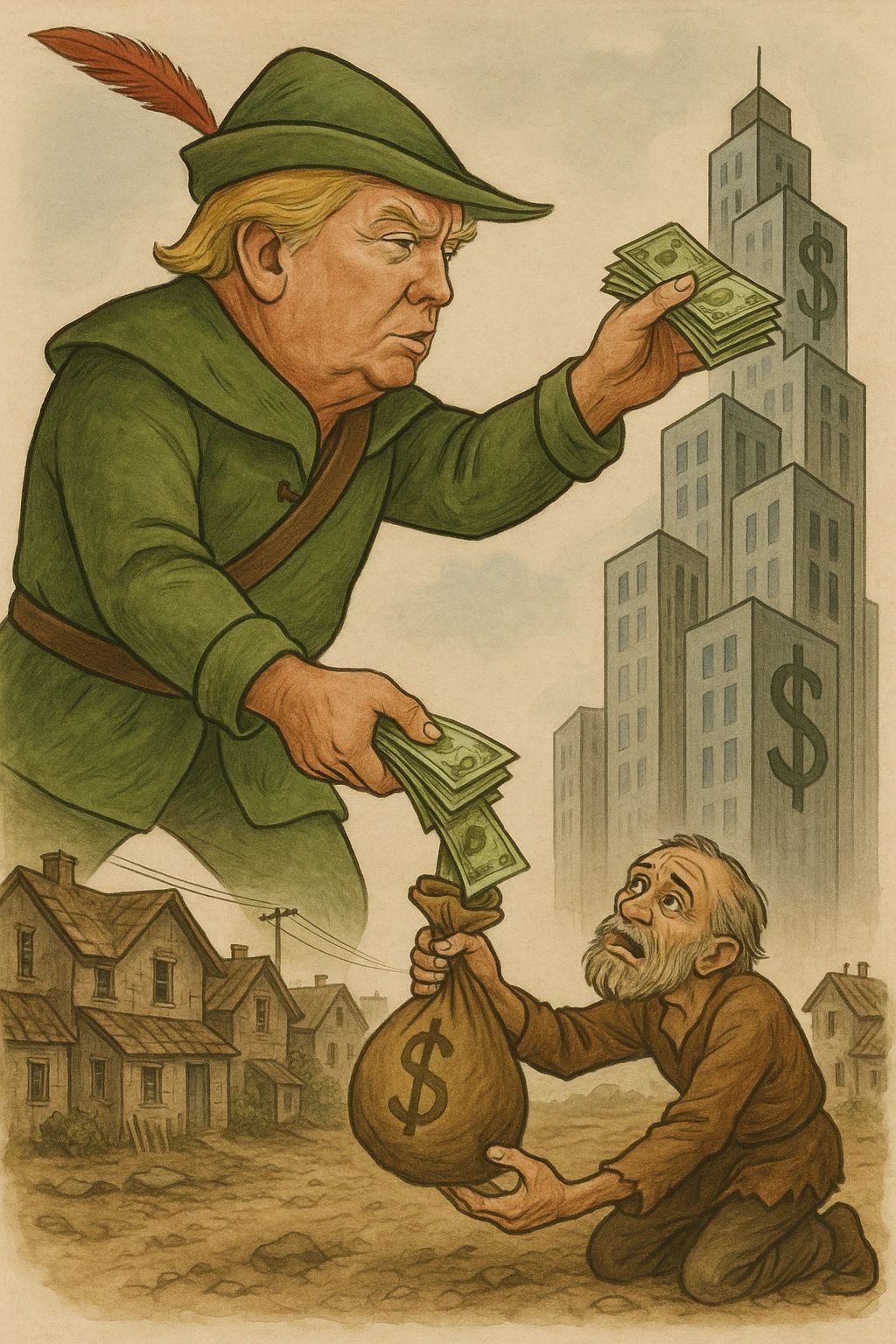
Eight months into his second term, President Donald Trump has painted a portrait of American economic revival, touting “explosive growth” and a manufacturing renaissance while defending his immigration crackdown as necessary for national security. Yet beneath the triumphant White House press releases lies a more complex reality that challenges many of the administration’s central narratives.In short, it’s all lies.
Trump’s bizarre tariff policies against China and even our own allies is already causing farmers to lose business. Soy sales in the USA to China accounted for approximately 25% of agricultural sales. Currently, China has cancelled ALL purchase contracts, leaving farmers in the red. And that is just ONE country and ONE product.
With immigrants being targeted by ICE, fruit and vegetable farmers have lost a sizable chunk of laborers willing to pick crops in 100-degree and above weather, leaving crops to wither and die in the fields and costing farmers BILLIONS with no relief in sight.These jobs, once worked by immigrants, were not “stolen” from Americans.Americans don’t want them.But a shortsighted, ethnocentric president continues to claim his immigration policy will stimulate job growth and make America safer.It has done neither.
Trump has repeatedly celebrated job creation, claiming 345,000 new positions since January. However, the most recent employment data tells a sobering story. July’s jobs report showed a meager 73,000 new positions—well below the forecasted 115,000—with healthcare accounting for the majority of gains. More concerning, revisions to previous months revealed significant overstatements: May’s initially reported 144,000 jobs were revised down to just 19,000, while June’s 147,000 became a far more modest figure.
The administration’s focus on cumulative job creation since inauguration obscures the recent trend. Manufacturing, a sector Trump promised to revitalize, has actually shed 14,000 jobs in May and June combined, despite unprecedented tariff protection. Manufacturing employment has continued to slide since Trump took office in January despite his promises of industrial renaissance. The administration points to increased investment and claims of factories returning to American soil. However, employment data reveals the sector’s vulnerability to global supply chains and automation trends that tariffs cannot reverse.
The disconnect between tariff protection and job creation suggests that modern manufacturing’s challenges—technological displacement, global competition, and supply chain complexity—require more nuanced solutions than trade barriers alone can provide.
Trump’s trade policy represents perhaps his most dramatic economic intervention. The administration collected $100 billion in tariff revenue between April and July—three times the previous year’s amount—after implementing a blanket 10% tariff on nearly all goods. Treasury Secretary Scott Bessent projects annual tariff revenue could reach $300-600 billion.
Yet this windfall comes with hidden costs. The Tax Foundation calculates Trump’s tariffs amount to an average $1,300 tax increase per household in 2025. The Penn Wharton Budget Model projects more severe long-term consequences: an 8% GDP reduction, 7% wage decline, and $58,000 lifetime loss for middle-income families. These losses, economists note, would be twice as large as raising the corporate tax rate from 21% to 36%.
The tariff strategy reflects a fundamental economic principle: tariffs function as consumption taxes paid by domestic purchasers, not foreign governments. While Treasury coffers swell, American consumers bear the burden through higher prices on everything from cars (projected to increase $4,711) to everyday goods.
And then there is Trump’s immigration policy. This enforcement has achieved its goal of increased detention, with ICE holding 47,892 people as of March—exceeding the system’s 40,000-person capacity by nearly 20%. This overcrowding has created deteriorating conditions, with reports of detainees sleeping on floors and facing medical care delays.
The administration’s expansion plans include military bases like Fort Bliss, initially designed to hold 1,000 immigrants but potentially expanding to 10,000. However, logistical challenges forced abandonment of the proposed Guantánamo Bay facility due to cost and complexity.
Comparisons to conditions in other countries, while politically resonant, obscure the practical challenges of rapidly expanding detention capacity while maintaining humane standards. Reports from Florida facilities describe “degrading conditions” and denial of medical care, raising questions about the sustainability of mass detention policies.
The administration’s narrative rests heavily on selective data interpretation. While second-quarter GDP growth did exceed expectations at 3.0%, this followed a concerning 0.5% decline in the first quarter. The Treasury Department’s median forecast of 2.3% annual growth, while solid, hardly constitutes the “explosive” growth claimed in White House statements.
Trump’s economic policies have generated measurable results: increased tariff revenue, some investment announcements, and periodic strong quarters. Yet the complete picture reveals an economy grappling with policy uncertainty, trade disruption, rising unemployment and inflation, and structural challenges that resist simple solutions.
For now, the data suggests Americans are living through not transformation but transition—paying higher prices for the promise of future prosperity while wrestling with the complex realities of global economics and demographic change. The true verdict lies not in White House press releases, but in the lived experiences of families navigating an economy caught between political ambition and economic reality. The real question is, when will the reality of the current calamity finally catch up to the gullible mindset of MAGA cultists?